ONE PROJECT.TWO ROLES.
ONE COORDINATION SYSTEM.
Special Task Accommodation. BIM management and hands-on BIM coordination across a multi-building accommodation development in Madinat Zayed.
- LOCATION
- Madinat Zayed · Al Dhafra Region · UAE
- MY ROLE
- BIM Manager + BIM Coordinator
- CLIENT / EMPLOYER
- Abu Dhabi Police / Aldar
- CONSULTANT
- Bayaty Architects
 View detail
INTRODUCTION
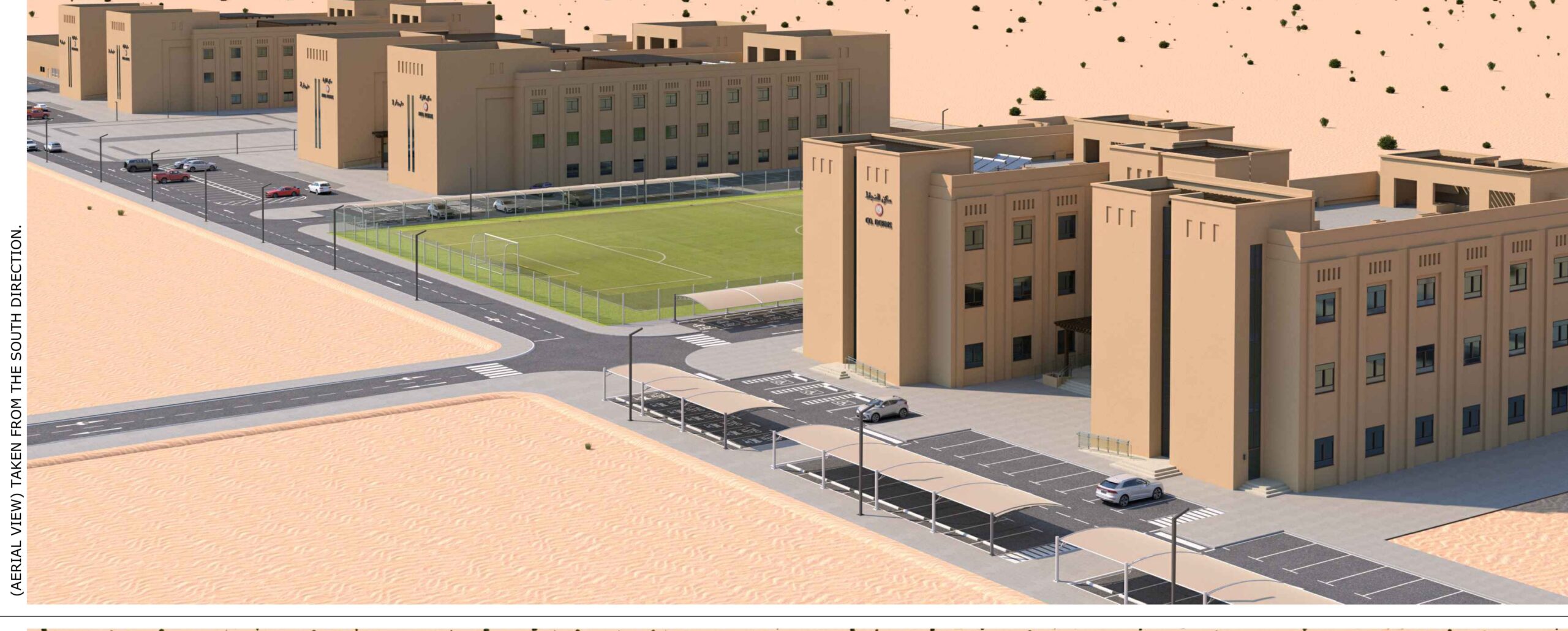
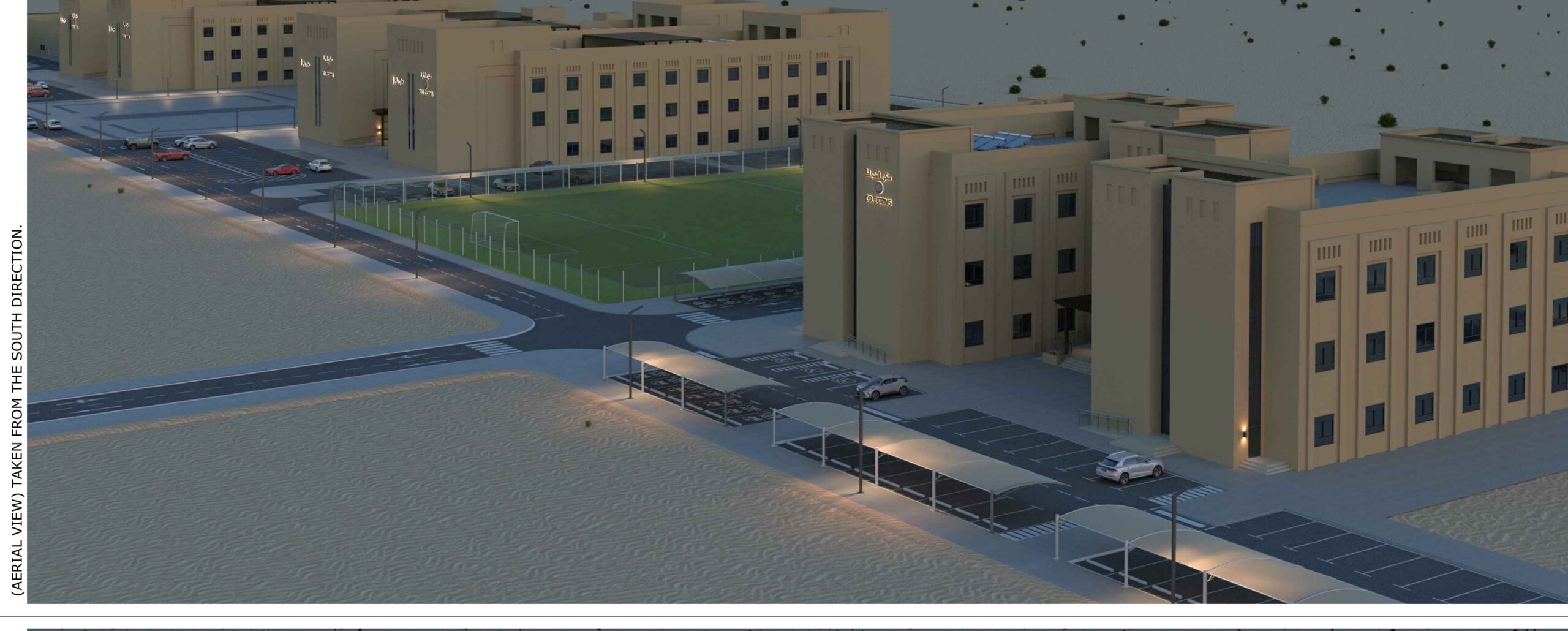
A multi-building accommodation campus combining CO and NCO accommodation, amenities, labour accommodation and support/service buildings. My work focused on building the BIM management framework and then using it directly in the coordination cycle.
01 / SPECIAL TASK ACCOMMODATION
Context
The project is a multi-building accommodation development in Madinat Zayed, Al Dhafra Region. It includes CO accommodation, four NCO accommodation buildings, an NCO amenities building, labour accommodation and service/support buildings. My role combined BIM management with direct coordination responsibility.
- Primary building packages
- 9
- Coordination streams
- 11
- Clash tests
- 56
- NWD coordination cycle
- Weekly
02 / SPECIAL TASK ACCOMMODATION
My contribution
I was responsible for setting up the management framework and then operating part of the coordination system myself.
01 · EIR review
Received and reviewed the EIR to understand the BIM deliverables, information requirements and coordination expectations.
02 · BEP development
Prepared the project BIM Execution Plan to translate the requirements into a clear delivery and coordination workflow.
03 · ACC model setup
Set up the project building models on ACC and organized the environment for controlled model sharing and coordination.
04 · Federated models
Built and maintained federated Navisworks models used as the common coordination reference for the building packages.
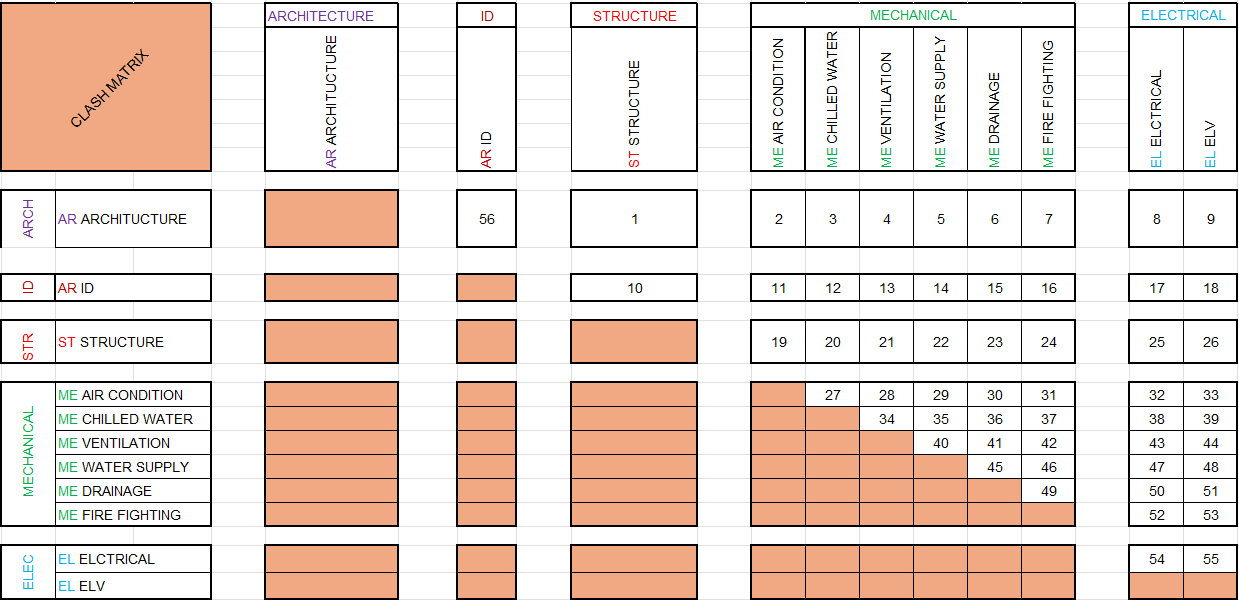
05 · Clash matrix implementation
Received the clash matrix, checked the discipline pairings and made sure the defined tests were correctly implemented inside the coordination files.
06 · Weekly coordination
Updated and uploaded the NWD models weekly, checked model quality and followed the clash cycle through reports and meetings.
07 · Clash dashboards
Built dashboards to convert clash data into a clearer management view for status, priority and weekly follow-up.
08 · Dual-role delivery
Worked across both BIM management and BIM coordination, connecting the project rules directly to the day-to-day model review process.
03 / SPECIAL TASK ACCOMMODATION
Process
The project workflow moved from requirements and project setup into a repeatable coordination loop.
-
Review requirements
Read the EIR and establish the expected BIM and coordination outputs.
-
Prepare the BEP
Define the BIM workflow, responsibilities, model exchange and coordination logic.
-
Set up ACC
Create the controlled model environment and organize the building packages for collaboration.
-
Build the federation
Combine architecture, ID, structure and MEP systems into federated Navisworks models.
-
Implement clash tests
Verify the clash matrix and ensure the 56 coordination tests matched the intended discipline/system interfaces.
-
Run the weekly loop
Update NWDs, review clashes, check model quality, issue reports and track progress through dashboards.
 View detail
 View detail
04 / SPECIAL TASK ACCOMMODATION
BIM / Technical strategy
The technical strategy focused on creating one controlled model environment and one repeatable federation / clash workflow for all building packages.
ACC model environment
I structured and uploaded the building models on ACC so the project team could work from controlled discipline files and consistent coordination inputs.
Federated model strategy
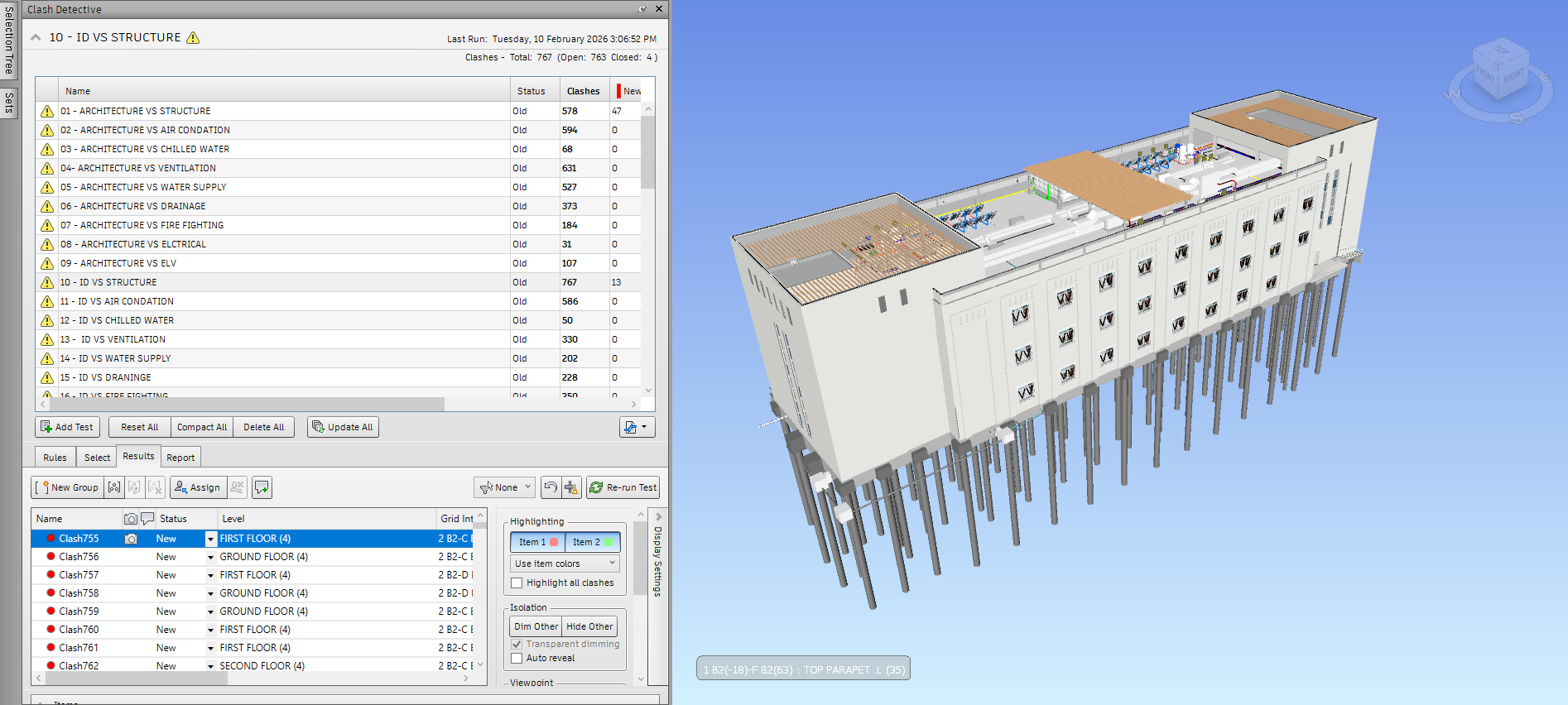
I created the Navisworks federation used to bring Architecture, ID, Structure, Mechanical systems, Electrical and ELV together for coordination review.
Clash matrix control
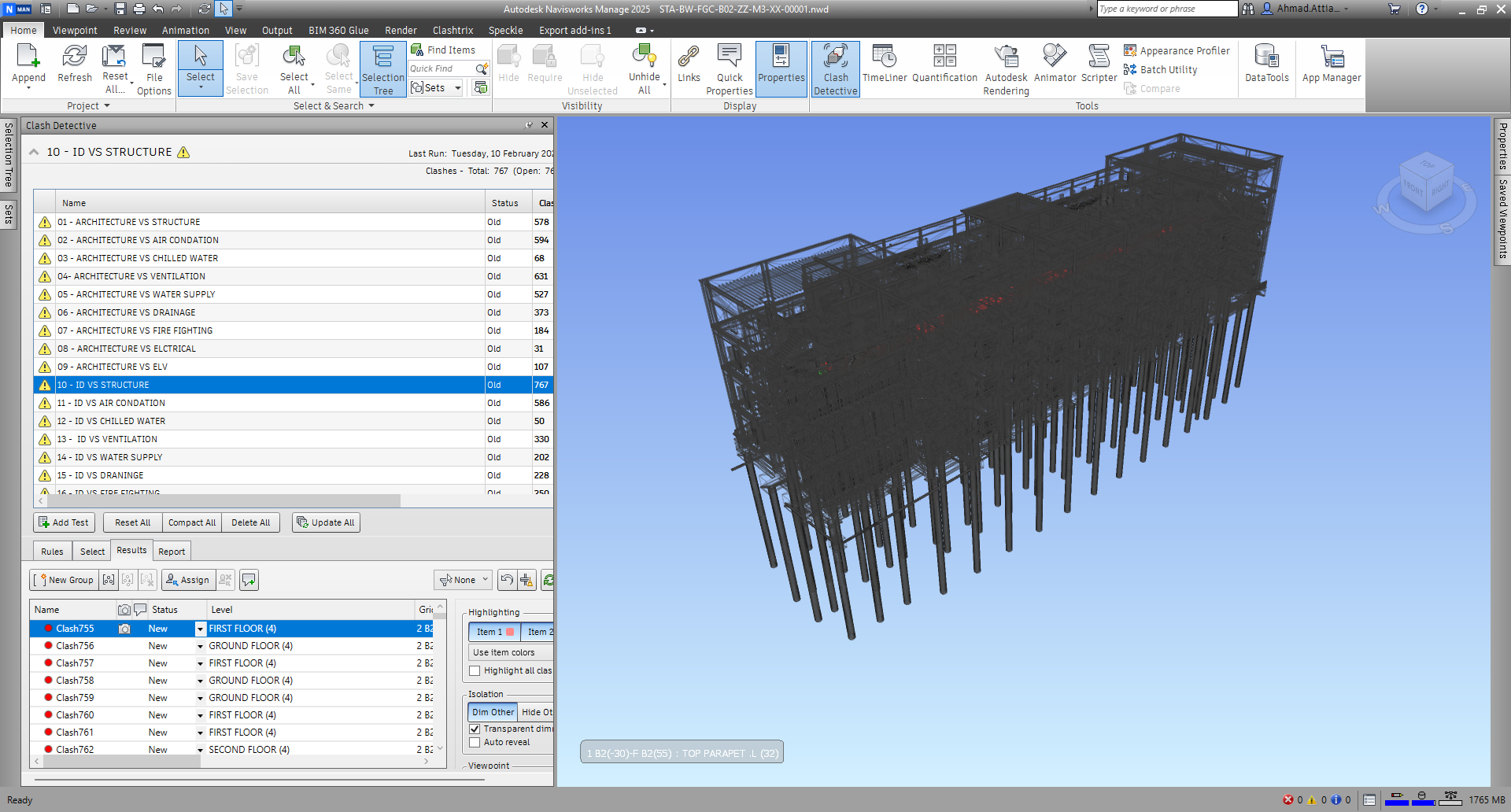
The matrix defined 56 discipline/system clash tests. I checked the test logic and ensured the same structure was correctly reflected inside the Navisworks files.
Weekly coordination baseline
The updated NWD became the weekly reference for clash review, reporting and follow-up — keeping each coordination cycle tied to a controlled model state.
 View detail
 View detail
05 / SPECIAL TASK ACCOMMODATION
Coordination
I handled the coordination setup from the clash matrix into the live Navisworks environment, then kept the federated model and clash information current through the weekly cycle.
Clash matrix verification
Checked naming, discipline pairings and test structure before using the matrix as the coordination baseline.
NWD federation
Built and updated the federated NWD model so every review started from a consistent model state.
Model QA
Reviewed coordination inputs and model quality before running or issuing the clash results.
Clash reporting
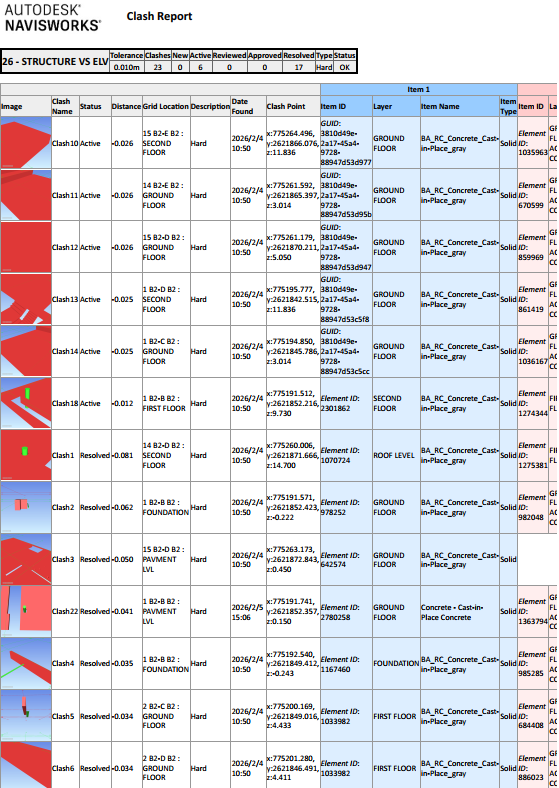
Generated structured clash reports containing status, element information, coordinates and issue views.
Dashboard reporting
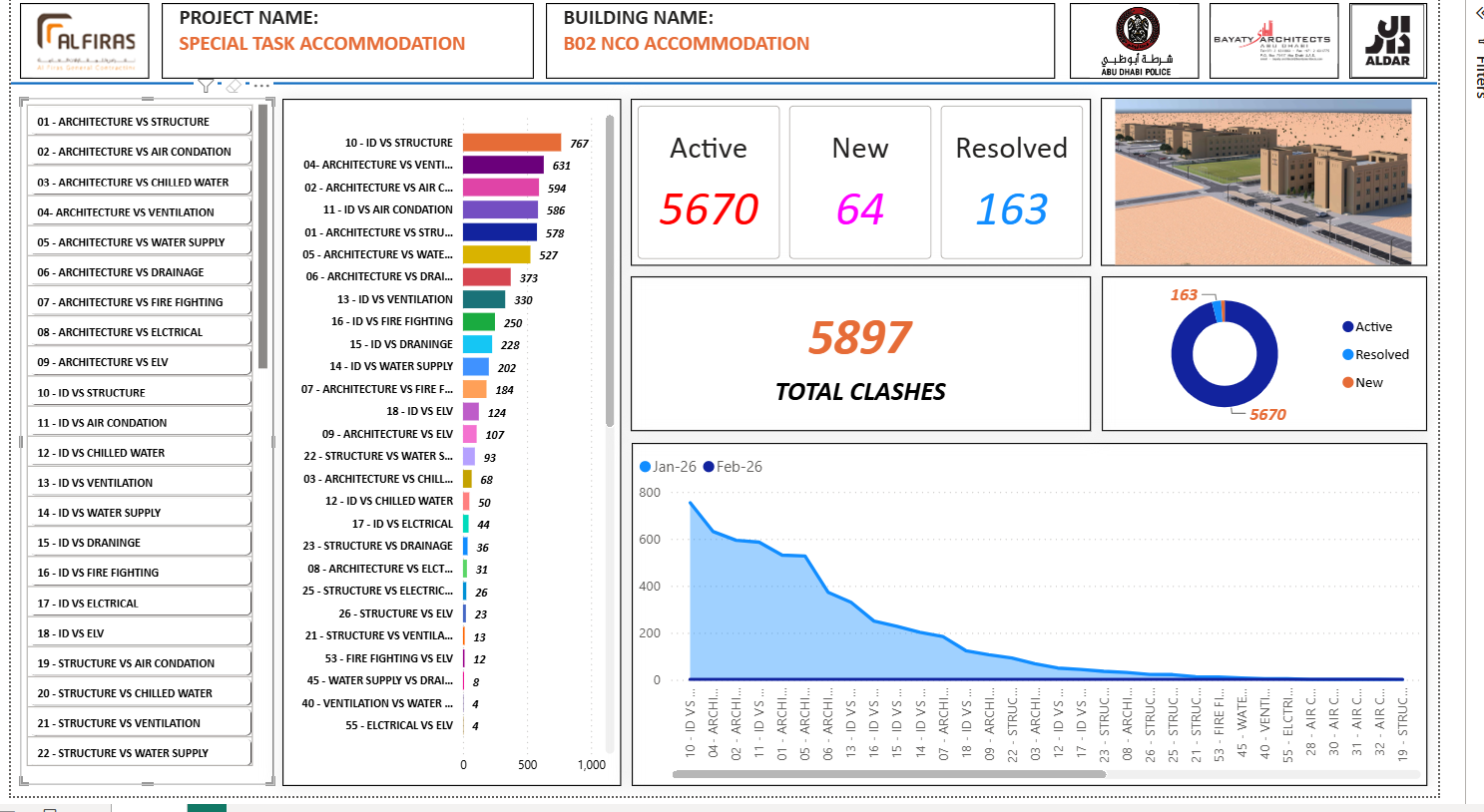
Converted clash data into a dashboard that made totals, active issues, new issues and resolution progress easy to track.
Weekly follow-up
Used the NWD, reports and dashboard together to support issue review and coordination follow-up with the project teams.
 View detail
 View detail
06 / SPECIAL TASK ACCOMMODATION
Output
The work produced both management documents and live coordination outputs.
BIM Execution Plan
Converted the EIR into a project-specific BIM delivery and coordination framework.
ACC model setup
Established the project model environment and organized the building packages for controlled collaboration.
Federated NWD models
Created and maintained the federated models used for multidisciplinary review and weekly coordination.
View detail
View detail
Clash matrix implementation
Verified and implemented the 56-test matrix across the coordination files.
View detail
View detail
Clash dashboard
Built a visual management layer for clash totals, status and weekly coordination progress.
View detail
View detail
07 / SPECIAL TASK ACCOMMODATION
Result
The BIM management framework and the coordination workflow became one connected system — from requirements and ACC setup to weekly federated models, clash control and visible reporting.
Consistent coordination baseline
Weekly NWD updates kept multidisciplinary review tied to a controlled and current federated model.
Clearer issue visibility
The matrix, clash reports and dashboard made coordination status easier to review, communicate and follow up.
Earlier conflict detection
Structured clash testing helped identify model conflicts before they reached downstream drawing and construction workflows.
Management + coordination in one role
Because I worked on both the BIM management framework and the live coordination process, project standards could be checked directly against the actual models and weekly outputs.
- Primary building packages
- 9
- Clash tests controlled
- 56
- B02 clash snapshot
- 5,897
- Federated NWD cycle
- Weekly
THINK.
SOLVE.
PRESENT.
Ahmed Attia · BIM Manager + BIM Coordinator